
When Equipment Performance Begins to Decline

Industrial blower repair services can help restore equipment performance, reduce downtime, and support longer equipment life. When blower or compressor performance begins to decline, identifying whether repair, rebuild, or replacement is the right solution can help minimize operational disruption.

As equipment ages, maintenance teams are often faced with an important question: 

Should the equipment be repaired, rebuilt, or replaced? 

A structured evaluation helps organizations make informed decisions based on equipment condition, operating requirements, and lifecycle costs. 
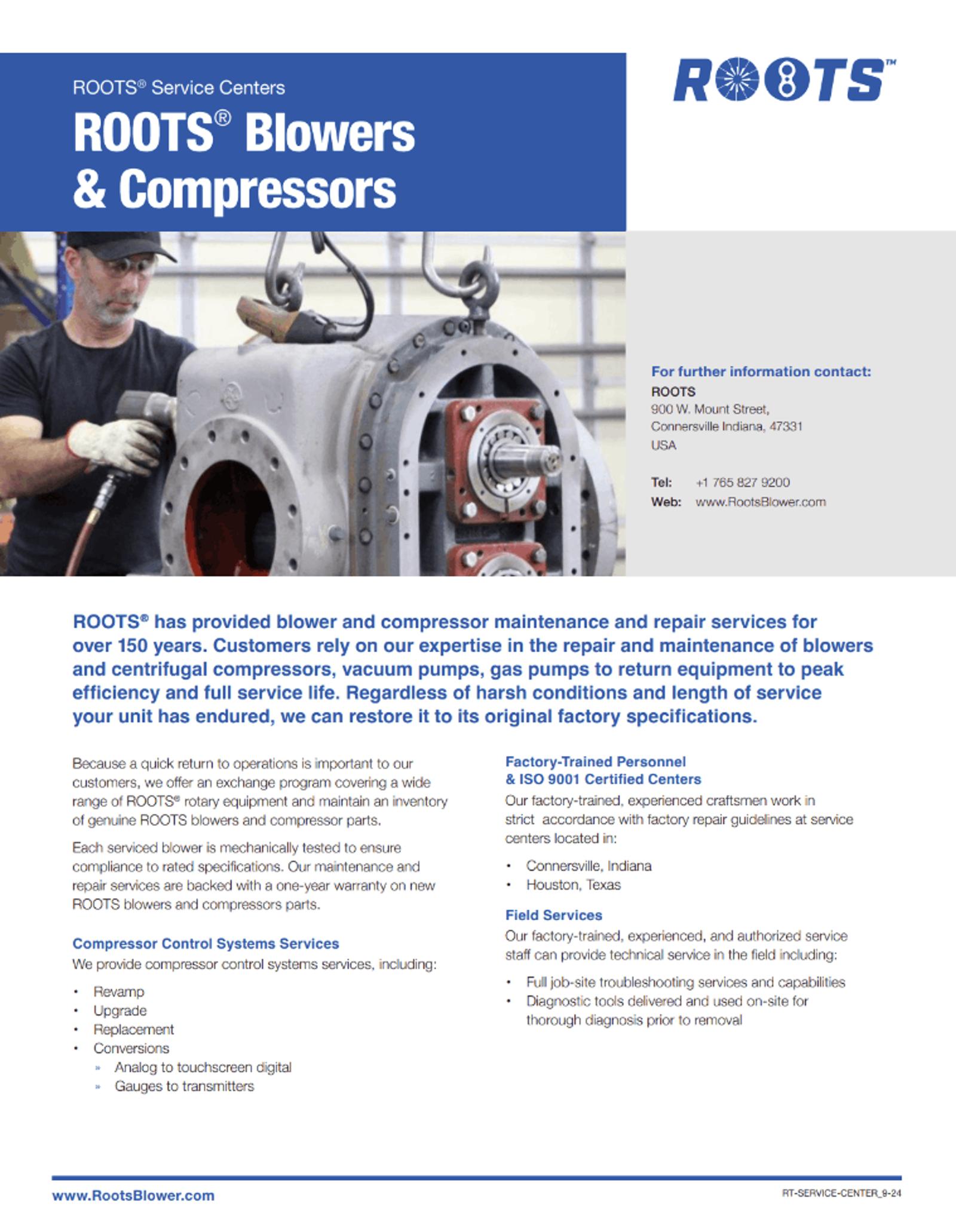
Service Centers Brochure Cover

Repair, Rebuild, or Replace?

The right next step depends on equipment condition, the extent of wear, operating history, current duty requirements, and the cost and downtime associated with each option. An OEM service assessment can help determine whether a targeted repair, more extensive restoration, or replacement evaluation is appropriate for the application.

Repair
  • Issue is limited to specific serviceable components
  • Equipment performance remains largely intact
  • Downtime requirements are minimal
  • Repair costs are cost-effective
Rebuild
  • Wear affects multiple components
  • Core equipment remains suitable for continued service
  • Restoring reliability is a priority
  • Long-term maintenance costs can be reduced
Evaluate Replacement
  • Process requirements have changed
  • Failures are recurring
  • Capacity, pressure, vacuum, or airflow requirements have increased
  • Existing equipment no longer supports operational goals


Not Sure Whether to Repair, Rebuild, or Replace?

Share your equipment information, operating symptoms, and operating requirements with a ROOTS service specialist. Our team can help identify the appropriate next step, provide service support, or assist with replacement-selection guidance when operating requirements have changed.

Common Signs a Blower May Need Service

Performance issues are often visible before a major failure occurs. 

Warning signs may include: 

  • Increased vibration
  • Unusual noise levels
  • Reduced airflow or pressure
  • Higher operating temperatures
  • Excessive power consumption
  • Lubrication concerns
  • Frequent maintenance requirements

Addressing these issues early can help reduce downtime and prevent secondary equipment damage.

When Repair Makes Sense

Many equipment issues can be corrected through targeted repairs. 

Repair may be appropriate when: 

  • Wear is limited to specific components
  • Equipment performance remains largely intact
  • Downtime requirements are minimal
  • Replacement costs outweigh repair costs

Factory-trained technicians can often identify opportunities to restore performance while minimizing operational disruption.  

When a Rebuild May Be the Better Option

For equipment with more extensive wear, a rebuild can often provide a cost-effective alternative to replacement. 

A professionally completed rebuild can help: 

  • Restore original operating performance
  • Extend equipment service life
  • Replace worn components
  • Improve reliability
  • Reduce future maintenance concerns

OEM repair facilities are equipped to evaluate equipment condition and determine whether a rebuild is appropriate for the application.  

Why OEM Industrial Blower Repair Services Matter

OEM service specialists combine equipment expertise, diagnostic tools, factory repair procedures, and genuine replacement parts to support informed service decisions. Depending on equipment condition and application requirements, support may include diagnostics, repair, field troubleshooting, parts replacement, and service for blowers, centrifugal compressors, vacuum pumps, and gas pumps.

OEM repair organizations have access to: 

  • Factory repair procedures
  • Original design specifications
  • Genuine replacement parts
  • Specialized testing equipment
  • Product-specific expertise

These resources help ensure repaired equipment is evaluated and serviced according to manufacturer requirements. ROOTS service centers utilize factory-trained personnel and maintain ISO 9001-certified service facilities. 

The Value of Field Service and Troubleshooting

In some situations, identifying the root cause of a problem requires on-site support. 

Field service teams can assist with: 

  • Equipment troubleshooting
  • Operational assessments
  • Diagnostic testing
  • Maintenance recommendations
  • Repair planning

Early diagnostics often help facilities avoid unnecessary downtime and make more informed maintenance decisions. ROOTS service personnel provide field troubleshooting and on-site diagnostic capabilities. 

Planning for Faster Recovery After Equipment Failure

When downtime occurs, response time matters. 

Facilities can reduce recovery time by working with service providers that maintain repair capabilities, replacement part inventories, exchange programs, and experienced technical support teams. 

ROOTS offers exchange programs and maintains inventories of genuine OEM replacement parts to support faster equipment recovery. 

Download the ROOTS Service Centers Brochure

Looking for OEM repair expertise for blowers, compressors, vacuum pumps, or gas pumps? 

Download the ROOTS Service Centers brochure to learn more about repair capabilities, field service support, exchange programs, OEM parts availability, and factory-certified service centers.

Country

Your request will be forwarded to the relevant individuals to assist with your request.
By clicking 'Send' you are authorizing Roots to contact you so that we may fulfill your request, as well as to communicate with you regarding our products and services.
Terms and Conditions
Privacy Policy

(* required fields)

This site is protected by reCAPTCHA.

Frequently Asked Questions

Common indicators include increased vibration, unusual noise, reduced airflow, higher temperatures, efficiency losses, and recurring maintenance issues.